Henrik Hartmann · 15 September 2026
Mapping Anchor Text Diversity Strategies After Domain Relocations in Resource-Constrained Crawl Environments
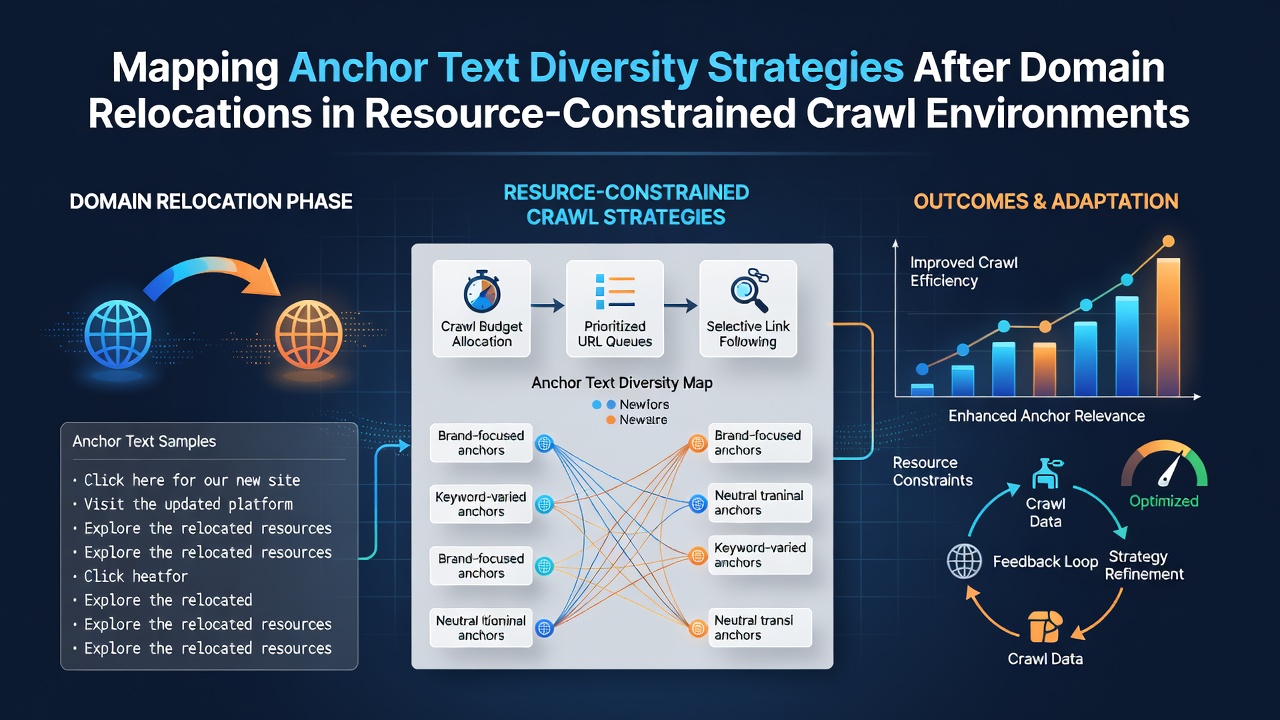
Domain relocations trigger significant shifts in how search engines process and evaluate backlink profiles, and anchor text diversity becomes a central factor when crawl resources remain limited. Teams managing these transitions track exact anchor distributions across new domains because concentrated phrases can delay full indexation while varied terms help crawlers allocate their budgets more efficiently across pages.
Core Challenges in Post-Relocation Crawl Scenarios
After a domain move, redirect chains consume crawl capacity that would otherwise reach new content, and research from web infrastructure studies shows that engines prioritize pages with established signals first. Those handling migrations often observe slower discovery rates for deep content when anchor texts repeat the same commercial phrases across multiple referring domains. Data collected during large-scale site transfers indicates that engines apply tighter scrutiny to link equity flow in the initial weeks, making diversity mapping essential for maintaining visibility.
Resource constraints compound these issues because crawlers sample fewer URLs per visit when server responses slow or when new domains lack prior crawl history. Observers note that sites using uniform anchors experience uneven indexing patterns where homepage and category pages receive priority while product or article pages lag. Strategies therefore focus on spreading anchor variations to signal topical breadth without triggering over-optimization filters that further reduce crawl frequency.
Techniques for Tracking Anchor Distributions
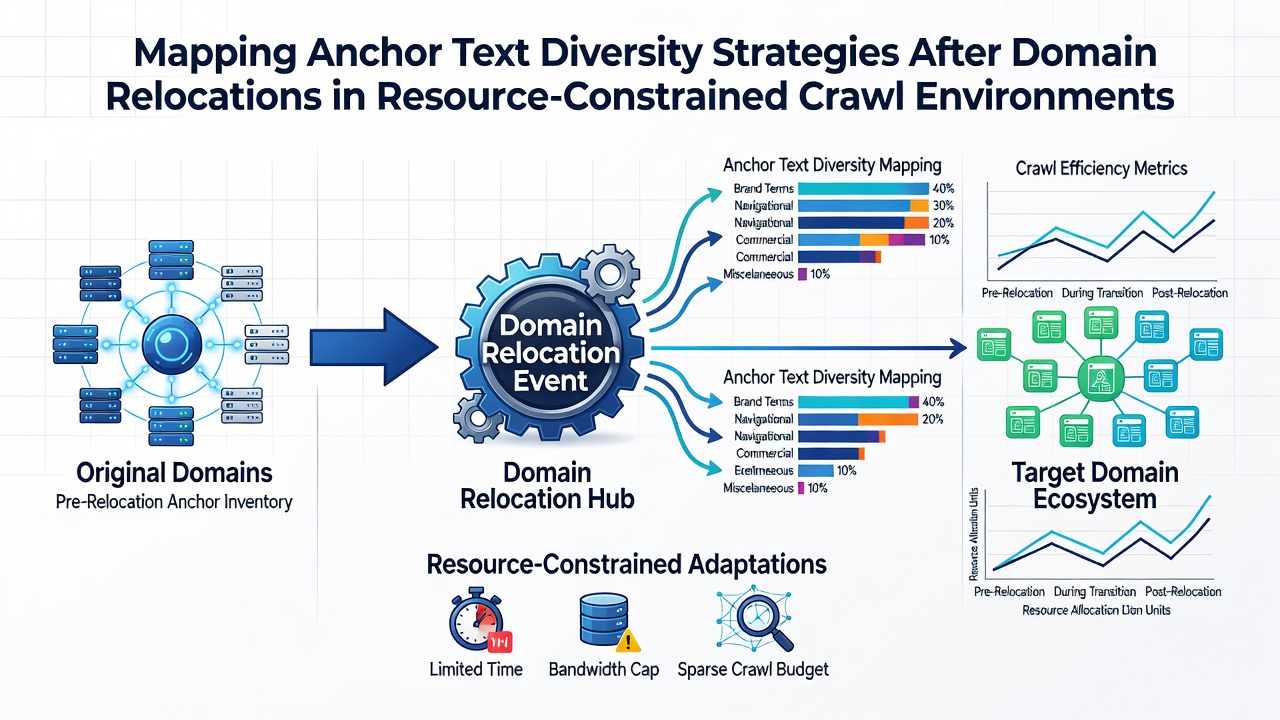
Mapping begins with export of referring domains and their associated anchors before any relocation occurs, then continues with regular post-move audits that compare pre- and post-migration profiles. Analysts apply clustering methods to group similar phrases, revealing concentrations that might otherwise remain hidden in raw link data. Tools processing these datasets frequently segment anchors into exact match, partial match, branded, and generic categories to quantify shifts over time.
One documented approach involves weighting anchor influence by the crawl priority of the target page, so high-value URLs receive more diverse incoming phrases while lower-priority sections tolerate broader generic terms. Studies tracking migrations in constrained environments reveal that maintaining at least four distinct anchor categories per major page cluster correlates with steadier indexing velocity. This segmentation also helps identify when external links point to outdated URLs, allowing teams to request updates that preserve equity without additional crawl expenditure.
Allocation of Limited Crawl Budgets
Crawl budget allocation after relocation depends heavily on internal linking structures and external signal strength, and teams prioritize pages that carry the strongest anchor diversity to accelerate discovery. When external links use repetitive commercial anchors, engines may treat those signals as less informative and reduce visit frequency accordingly. Reports compiled by search infrastructure researchers demonstrate that introducing natural language variations, including question-based and long-tail phrases, encourages broader exploration of site architecture.
Practical mapping exercises often incorporate server log analysis to measure actual crawl patterns rather than relying solely on third-party estimators. These logs show that pages receiving mixed anchor types from multiple referring domains attract more consistent visits even when total budget stays restricted. In September 2026, updates to common crawler behavior further emphasized relevance signals over volume, prompting teams to refine anchor strategies toward contextual fit instead of sheer quantity.
Implementation Patterns Observed Across Cases
Teams that succeed in these environments typically audit anchor profiles in batches, focusing first on the top 20 percent of pages by traffic value. They then request anchor updates from referring sites where exact-match commercial terms dominate, replacing them with branded or descriptive alternatives that still convey intent. Evidence from migration tracking projects shows this selective outreach preserves crawl resources for content that matters most while gradually improving diversity scores.
Another observed pattern involves monitoring redirect chains and pruning unnecessary hops that waste budget on intermediate pages. When combined with anchor diversification, this cleanup allows remaining crawl allocation to reach deeper content faster. Data shared through academic web measurement initiatives confirms that sites applying both techniques experience more uniform indexing across relocated domains compared with those addressing anchors in isolation.
Conclusion
Effective mapping of anchor text diversity after domain relocations requires ongoing measurement, targeted outreach, and careful budget management within constrained crawl settings. Organizations that integrate these elements maintain steadier visibility by ensuring crawlers encounter varied yet relevant signals across their new infrastructure. Continued observation of indexing patterns and anchor category balance provides the data needed to adjust tactics as engine behaviors evolve.